Officially incorporated in 1866 in response to the need for coal during the Civil War, Shenandoah sits atop the Mammoth Vein – the largest known deposit of anthracite coal in the United States. The town became a massive mining hub, so much that it was the only small town in Pennsylvania to be serviced by three railroads: the Lehigh Valley Railroad, the Reading Railroad, and the Pennsylvania Railroad. Shaped by waves of immigration, Shenandoah served as a melting pot for European immigrants seeking work in the coal mines and garment factories. The town was even featured in Ripley’s Believe It or Not! as the most congested square mile in the United States. At its peak, the population reached over 30,000, with some families reportedly living in cellars due to severe housing shortages.
Shenandoah has undergone a 50+ year economic decline due to the collapse of the coal industry. The population has plummeted to an estimated 5,000, nearly 23% of homes are vacant, and the town faces frequent structural fires and infrastructure issues – including a recent water main break, which left the town without water for days. Despite this, the borough is attempting to recover through blight remediation grants.
My photo story aims to capture Shenandoah, Pennsylvania in its ongoing revitalization – starting with the past and moving to the future. While I’d originally taken on this project with the intention of highlighting the broader pattern of economic depression seen in so many small American towns that were founded upon a single industry which eventually collapsed, I have found that one of the key themes to my project is eternalism: every structure contains multiple versions of itself. Past life, present decay, and the imagined future. The coexistence of abandoned structures, historical landmarks, and new construction creates a patchwork of loss, identity, and fortitude unique to post-industrial communities. I hope my photo story will encourage you to reconsider how you perceive towns like Shenandoah – not as forgotten, but as resilient and hopeful for a better future.
Coal Keeps the Lights on, Long After the Town has Gone Dim
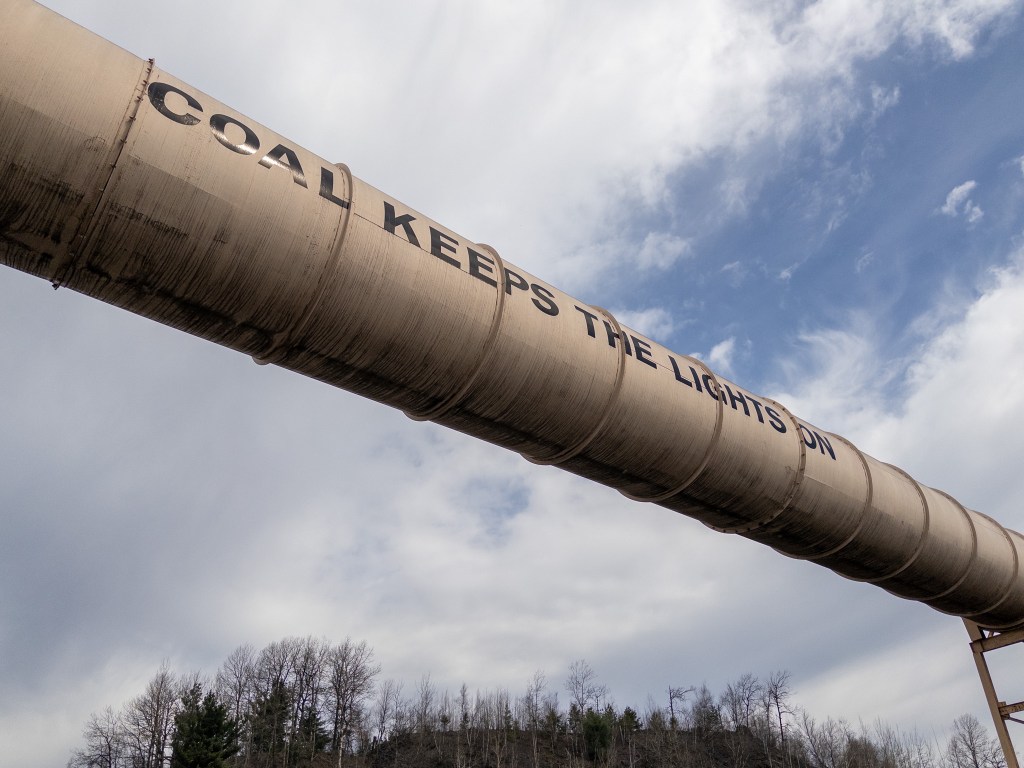
An overland coal conveyor displays the popular slogan along Route 54 entering Shenandoah, Pennsylvania on Monday, April 13, 2026. While many collieries in Shenandoah closed between the 1950s-60s, surface mining operations remain active in the area. (Photo by Brooke Beck)
Decayed Beauty
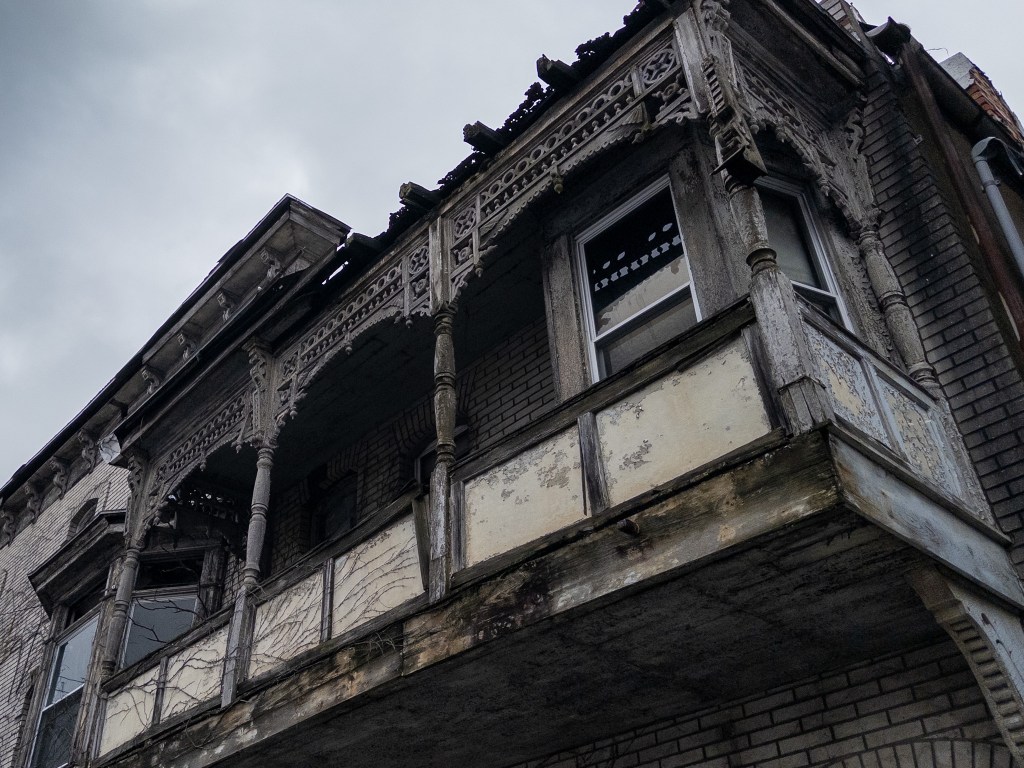
A residential building on E Centre Street in Shenandoah, Pennsylvania rests – condemned – on Sunday, April 26, 2026. Ornate woodwork and brick finishes remain on the structure, reflecting the town’s past prosperity as its current condition underscores ongoing economic decline and the need for remediation. (Photo by Brooke Beck)
Preservation and Neglect
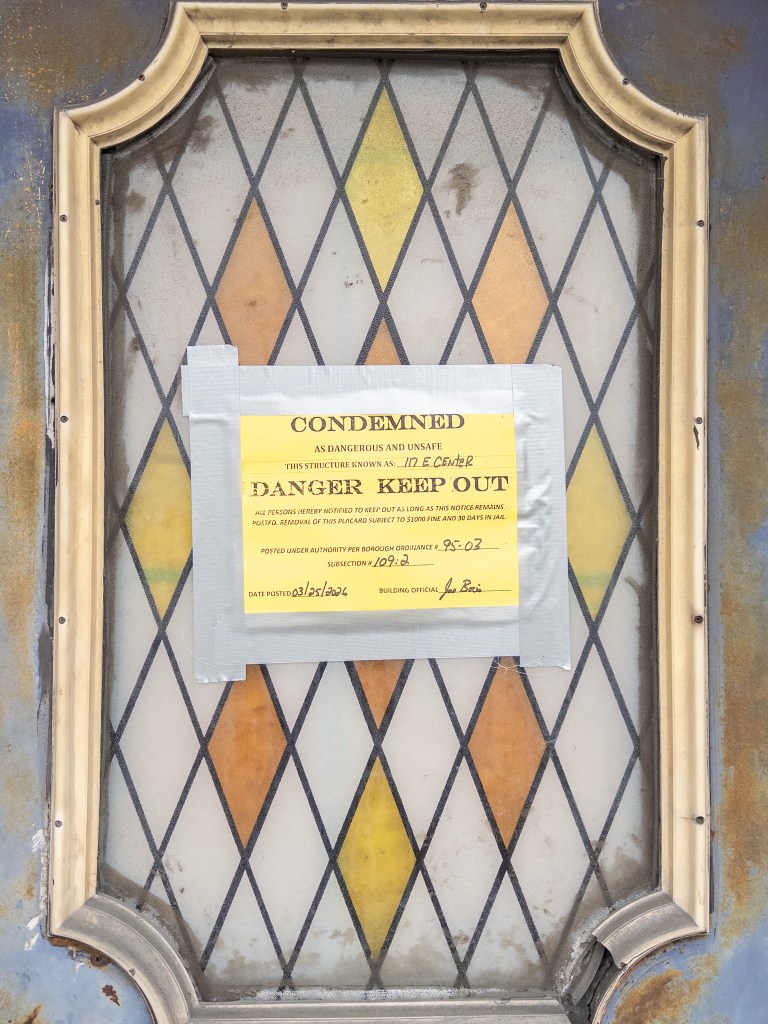
A stained glass door within a building front on E Centre Street in Shenandoah, Pennsylvania bears a condemnation notice on Monday, April 13, 2026. The decorative stained glasswork contrasts the warning taped over it, suggesting a shift in pride in the home’s appearance to its current state of disrepair. (Photo by Brooke Beck)
Ongoing Hardship
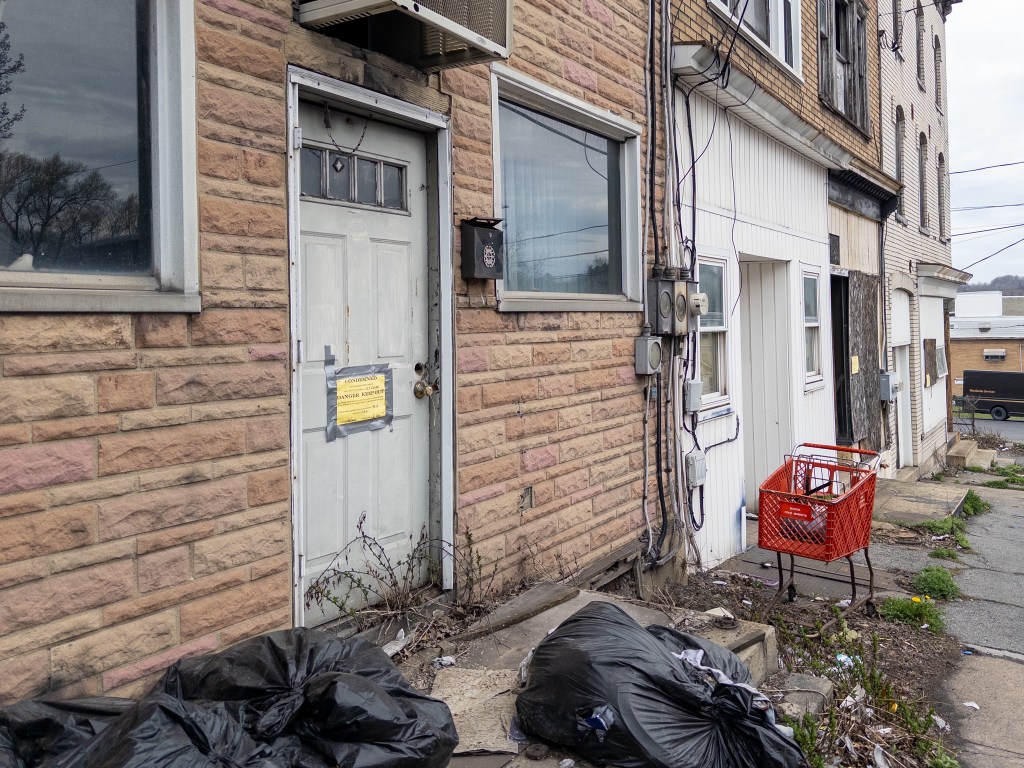
A series of residential buildings on E Centre Street in Shenandoah, Pennsylvania on Monday, April 13, 2026. Each have been marked with a distinctive yellow condemnation notice. Trash and debris line the sidewalk – a reminder of the persistent economic struggle in parts of the community. (Photo by Brooke Beck)
Reclamation by Nature
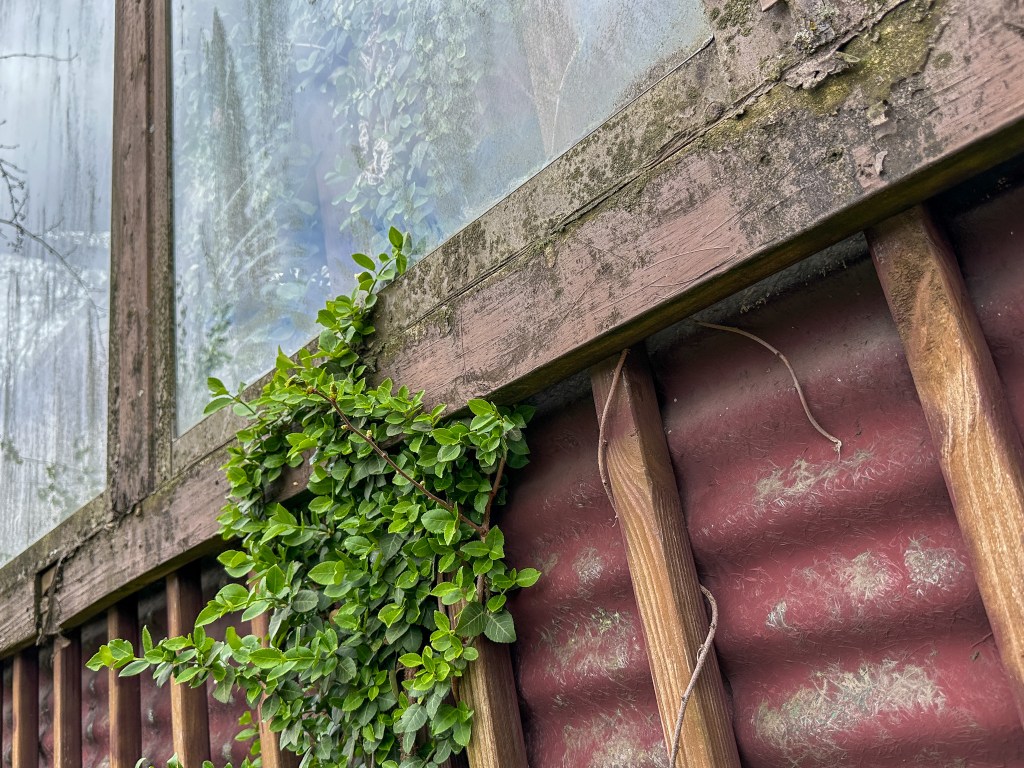
A small enclosed porch is overtaken by new life on E Centre Street in Shenandoah, Pennsylvania on Sunday, April 26, 2026. This is one of a few fates for neglected structures in the area: deconstruction by nature, fire, or man. (Photo by Brooke Beck)
What Remains Inside
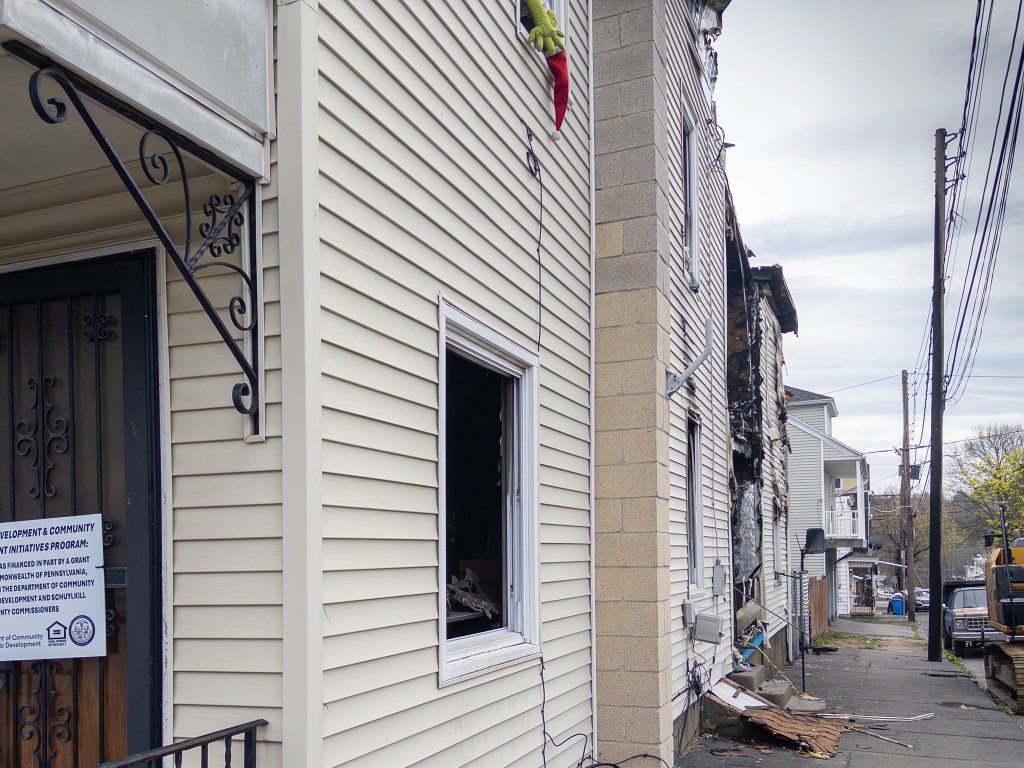
A fire-damaged residential building on E Lloyd Street in Shenandoah, Pennsylvania on Monday, April 13, 2026. Signage related to state-funded redevelopment marks the property’s front door while the arm and hat of a stuffed Grinch toy are seen dangling from an upper story window. Since the fire, the property has been acquired by Shenandoah Borough. The home is scheduled for demolition in winter 2026. (Photo by Brooke Beck)
The Past and Present Intertwine
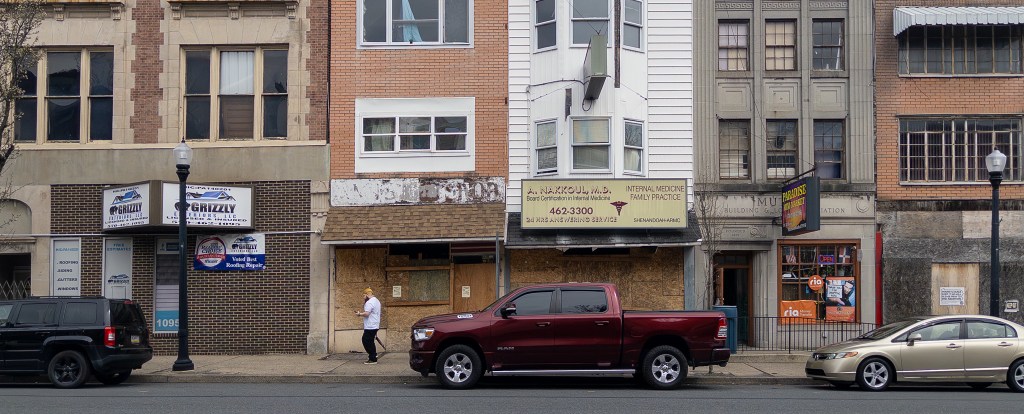
A patchwork of mixed-use buildings on N Main Street in Shenandoah, Pennsylvania on Monday, April 13, 2026. Some storefronts remain in use to suit modern-day economic needs, while others are boarded and marked as condemned. (Photo by Brooke Beck)
From Coal to Kielbasi
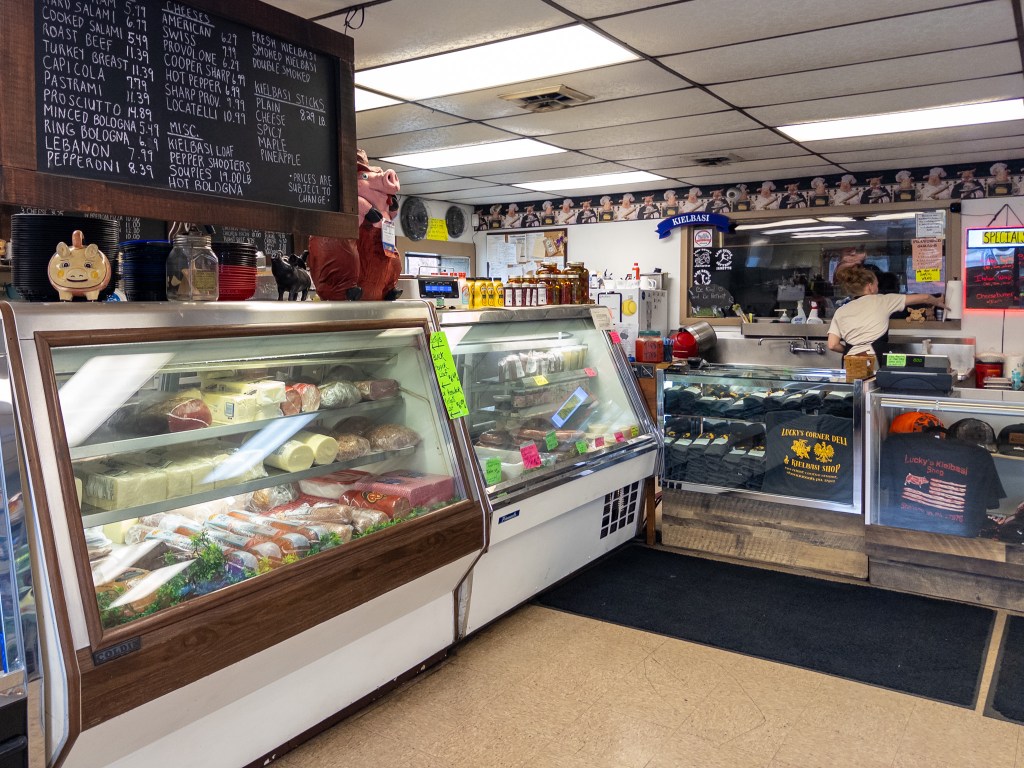
Lucky’s Corner Deli & Kielbasi Shop in Shenandoah, Pennsylvania on Tuesday, April 28, 2026. Widely considered the “kielbasa capital of the US,” Shenandoah has deep Eastern European roots due to the influx of immigrants from Lithuania, Poland, Ukraine, and Slovakia who were drawn by the booming anthracite industry. The demand for kielbasa here is high! Shenandoah is famous for its dense concentration of traditional, family-owned Polish meat markets which draw thousands of visitors each year. (Photo by Brooke Beck)
A Different Kind of Work
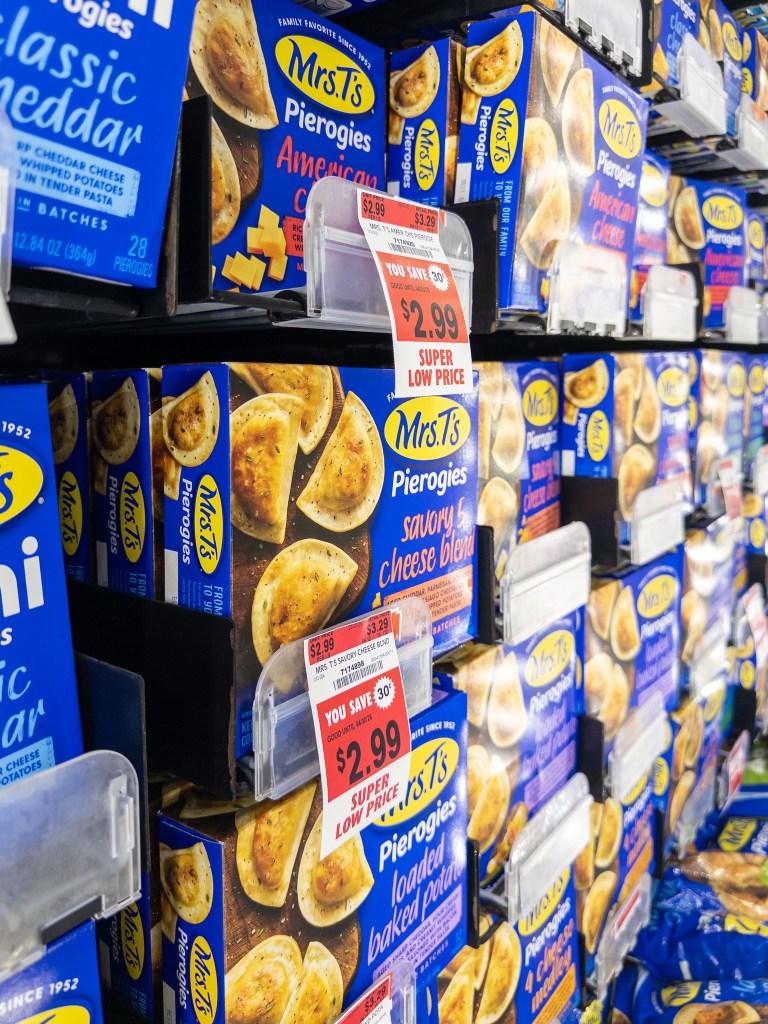
The Mrs. T’s Pierogies display at Redner’s Warehouse Market in Shenandoah, Pennsylvania on Tuesday, April 28, 2026. Originally founded in 1952 by Ted Twardzik (Ted’s mother was Mrs. T), Ted began the company in Shenandoah to share the popular Polish dish he grew up with. The company has now grown into the largest frozen pierogi producer in the United States and still maintains its headquarters and manufacturing base in Shenandoah today. Mrs. T’s is one of the top employers in the area. (Photo by Brooke Beck)
Hope on N Main Street
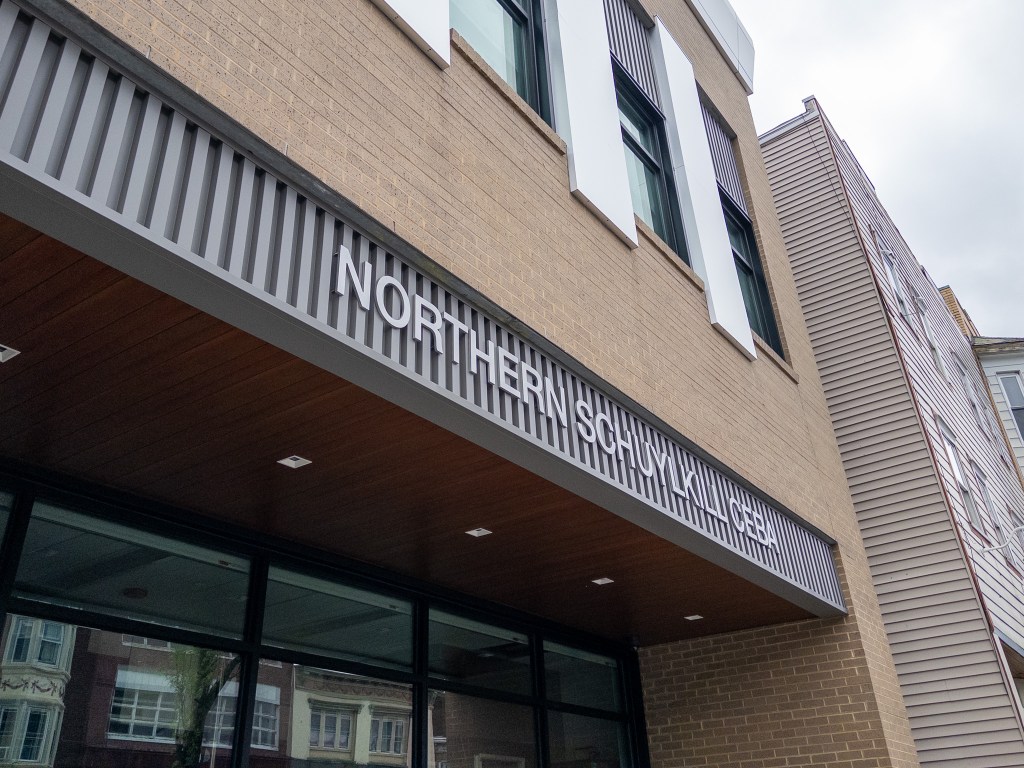
The Northern Schuylkill Center for Education, Business, and Arts (CEBA) – a new construction on N Main Street in Shenandoah, Pennsylvania – is four days away from its grand opening on Sunday, April 26, 2026. The new revitalization project aims to create jobs, spur economic development, and support local entrepreneurs. (Photo by Brooke Beck)
In Their Honor
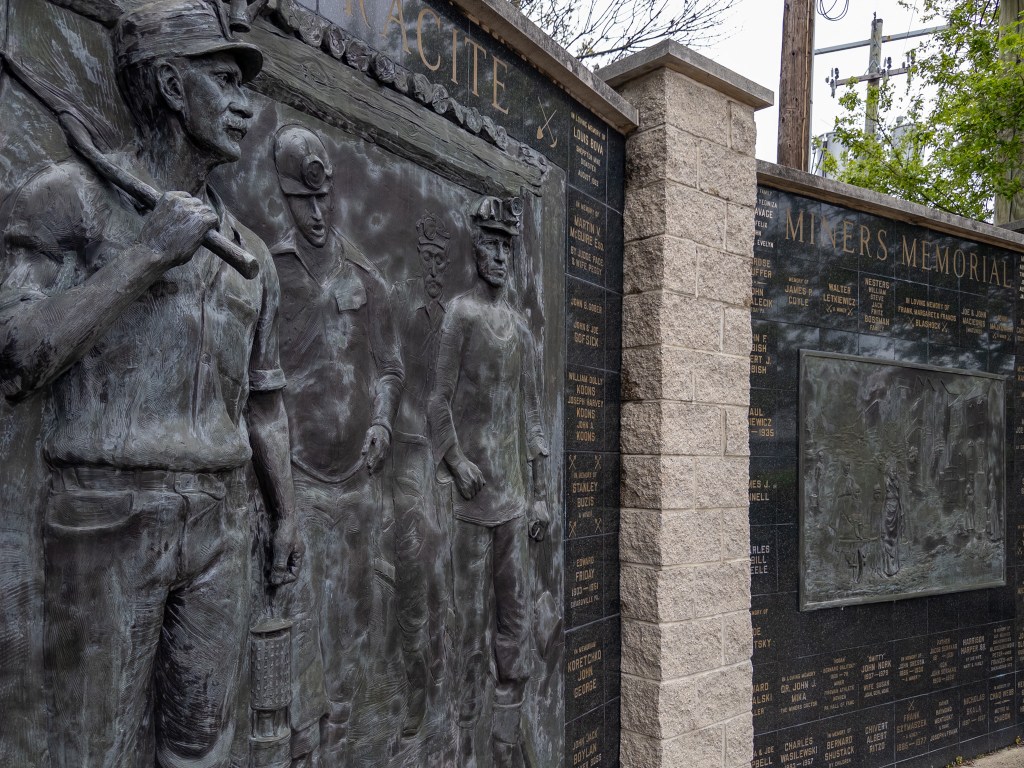
The Pennsylvania Anthracite Miners Memorial in Shenandoah, Pennsylvania on Sunday, April 26, 2026. While the town is actively redefining itself through its ethnic roots and revitalization grants, the memorial – which was originally dedicated in 1996 – honors the miners who toiled in the anthracite industry. (Photo by Brooke Beck)
What We Preserve
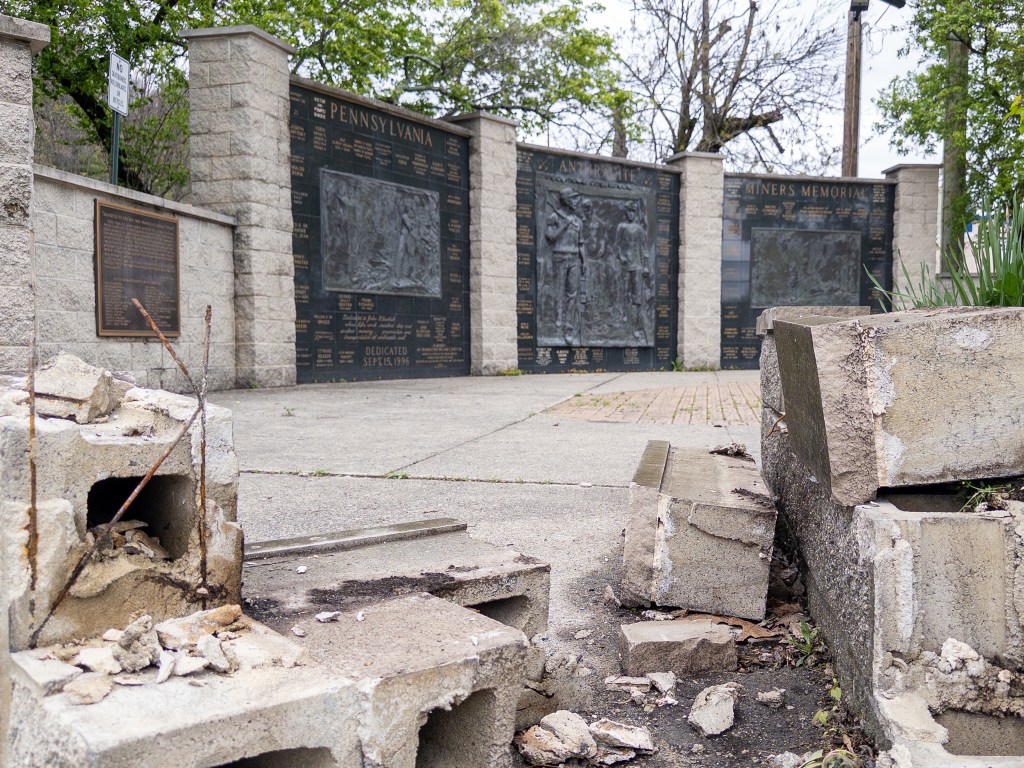
Broken pieces of a stone retention wall lie before the Pennsylvania Anthracite Miners Memorial in Shenandoah, Pennsylvania on Sunday, April 26, 2026. Decay and remembrance exist side by side here, reflecting a town shaped by both loss and the persistence of its history. (Photo by Brooke Beck)

